
Why Is My Tap Water Scalding Hot in Summer?
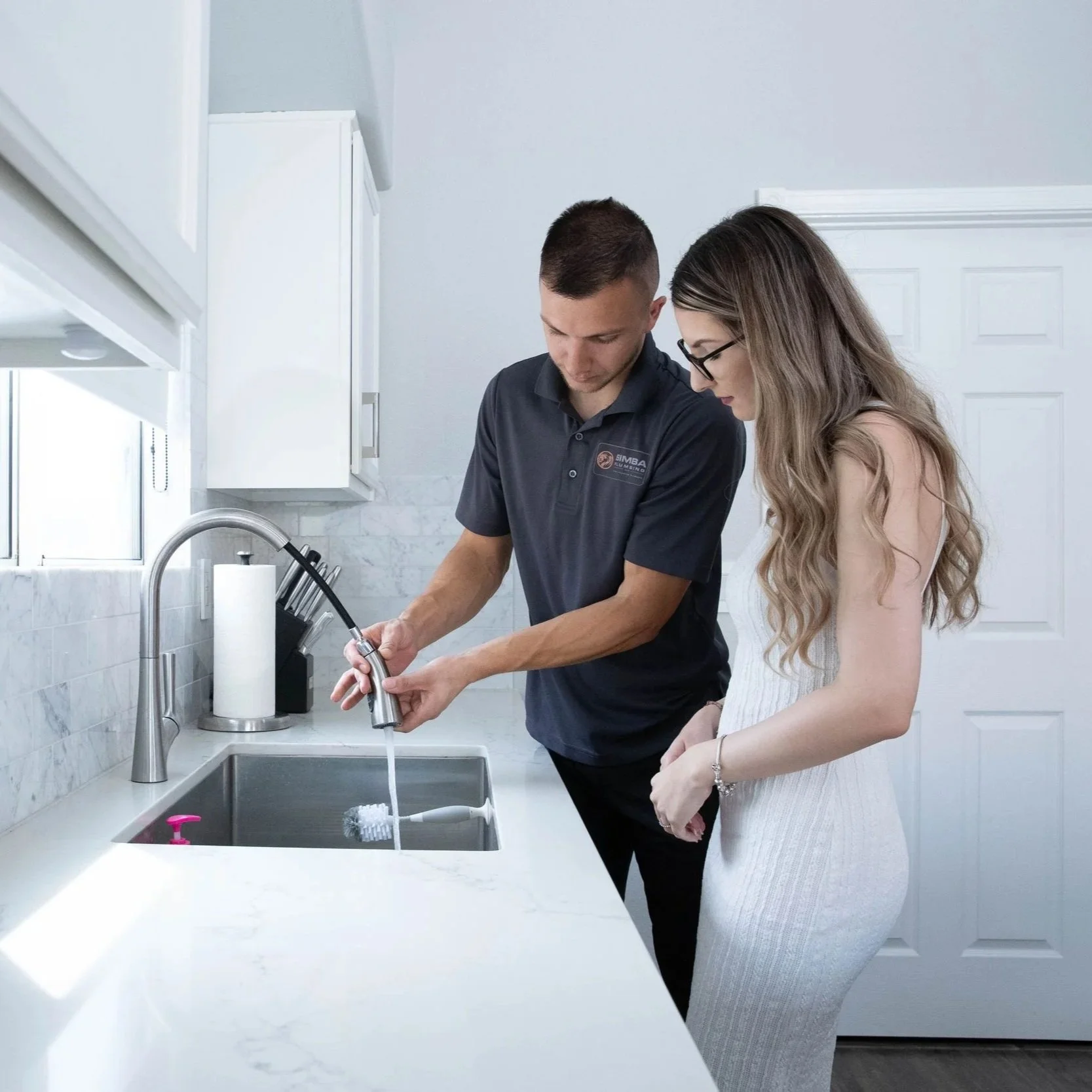
The cold tap runs, and what comes out is nearly too hot to hold a hand under. In winter, that would mean a plumbing problem. In the middle of a desert summer, it's just Tuesday — until someone gets burned.
Scalding tap water in summer is a genuine safety issue, not a quirk. In the Valley, where outdoor temperatures push 110°F and water supply lines run through sun-baked soil and uninsulated wall cavities, hot water coming from the cold tap is a mechanical and installation problem that only gets worse as temperatures climb.
Why cold water comes out hot
Under normal conditions, cold water in supply lines stays close to the groundwater temperature — typically 65°F to 75°F in cooler months. In summer, the water sitting inside supply lines bakes. The pipes themselves are the issue.
In desert climates, water supply lines are often routed through attics, exterior walls, or shallow underground trenches. An attic in the Valley during summer can reach 150°F to 170°F. A copper or PEX line running through that space has no insulation to protect it. The water sitting inside heats to ambient temperature within minutes.
Water heater temperature settings compound this. A water heater set to 140°F combined with a cold supply line that's already 100°F means the temperature differential at the mixing valve is far smaller than intended. In some cases, the "cold" output at the faucet is barely distinguishable from warm.
The anatomy of the problem
Three separate mechanisms contribute to scalding tap water in summer.
Sun-heated supply lines. Water lines routed through exterior walls with west or south exposure, uninsulated attic runs, or shallow-buried trenches absorb radiant and conductive heat from the surrounding material. PEX tubing — now the most common material in residential construction — is flexible and useful but retains heat more readily than copper. A section of PEX inside a west-facing wall can reach 100°F to 120°F when ambient temperatures stay above 105°F for extended periods.
Thermostatic mixing valve failure. Many homes have a thermostatic mixing valve (TMV) at the water heater or at a whole-house mixing point. This valve blends hot and cold supply water to deliver a fixed outlet temperature — typically 120°F to 125°F — and is designed to prevent scalding at fixtures while keeping the water heater at a higher temperature that kills Legionella bacteria. When a TMV fails — usually from scale accumulation, a worn cartridge, or a stuck check valve — the hot supply can pass through at full temperature, and the "cold" port may deliver inadequately cooled water.
Pressure imbalance at the fixture. When cold supply pressure drops relative to hot pressure — from a running dishwasher, irrigation zone, or another fixture drawing heavily on the cold line — a single-handle faucet or shower valve can shift toward the hot side without the handle moving. This is more of a momentary surge than a persistent problem, but it accounts for some of the sudden-hot events homeowners notice.
Water heater check valve failure. Most tank and tankless water heaters include a check valve on the cold-water inlet to prevent hot water from pushing backward into the cold supply. When that check valve wears or fails, hot water migrates into the cold line during periods of thermal expansion — particularly in a closed system where a pressure-reducing valve or backflow preventer is present. The result is warm-to-hot water at the cold tap, even when the supply line itself is not baking in the attic.
What temperature is actually dangerous
Water at 120°F causes scalding burns in about 5 minutes of contact. At 130°F, that drops to 30 seconds. At 140°F, serious burns occur in 5 seconds. At 150°F, nearly instantly.
Children and elderly adults are more vulnerable — their skin is thinner and scald injuries progress faster. A toddler can sustain a third-degree burn from 140°F water before the reflexive withdrawal happens.
The Occupational Safety and Health Administration and most plumbing codes recommend that hot water delivered to fixtures not exceed 120°F. Water heaters are often set higher (140°F) to prevent bacterial growth, then tempered down to 120°F at a mixing valve before distribution. If that mixing valve is absent or has failed, full-temperature water reaches every fixture.
If the hot water coming from any fixture — including the "cold" tap — feels uncomfortably hot and the water heater is set above 120°F, test the temperature with a thermometer before assuming the heater is the only source. Lines running through attics or uninsulated exterior walls can deliver water well above 120°F even when the heater is properly set.
The water heater temperature setting role
A water heater set too high makes every downstream problem worse. Water heaters shipped from the factory are often set at 120°F, but some are set higher. A setting of 140°F or 150°F delivers scalding water the moment a TMV fails or a check valve sticks.
Checking and adjusting the temperature setting on a tank water heater is a 10-minute job. On a gas heater, the thermostat dial is on the gas valve assembly. On an electric heater, the thermostat is behind the access panels and requires turning off the circuit breaker first. Tankless water heaters have digital temperature controls that are accessible without tools.
For households with immunocompromised individuals, children, or elderly residents, most health authorities set 120°F as the safe delivery threshold at fixtures — which typically means setting the water heater to 120°F if a whole-house TMV is present, or 140°F at the heater with a TMV set to deliver 120°F at fixtures.
How pipe routing contributes in desert climates
Homes built before modern energy codes often have supply lines routed through the least thermally protected parts of the structure — attics, exterior wall cavities, and garage-adjacent spaces. In the Valley, a home with copper lines in an uninsulated attic can see supply water temperatures above 100°F within an hour of the sun reaching peak intensity.
Re-routing supply lines through conditioned space, adding pipe insulation rated for high-temperature exposure, or installing reflective barriers in attic spaces reduces this substantially. Pipe insulation for hot water applications is rated to specific temperature ranges — standard polyethylene foam (R-2 to R-4) degrades above 180°F, but handles the ambient temperatures encountered in attic runs. Reflective foil-faced insulation on attic pipes reduces radiant heating from the roof decking.
The other factor is line length. A long run of uninsulated pipe from the water heater to a distant bathroom means a large volume of water sitting and heating while the fixture is idle. A recirculation system keeps hot water moving, but solves a different problem — the issue here is the cold line baking in the heat, not the hot line going cold.
A quick test: open only the cold tap and let it run for 60 seconds. If the water starts hot and then cools as fresh water from the main line flushes the sun-heated water out of the local run, the supply line routing is the source. If the water stays hot throughout, the problem is the water heater setting or a failed mixing valve.
What a plumber checks
A licensed plumber working through a scalding-water complaint checks several things in sequence.
Water heater thermostat setting and actual outlet temperature at the heater — verified with a calibrated thermometer at the drain valve port. If the heater is set to 140°F and delivering 140°F, the next step is the mixing valve.
Thermostatic mixing valve condition and calibration. TMVs have a rated outlet temperature that drifts with scale accumulation. In hard water conditions at 200–400 ppm TDS, TMV cartridges develop scale deposits that hold the valve open toward the hot port. A TMV that's passing full hot temperature needs cleaning or cartridge replacement — usually $150 to $350 in parts and labor.
Supply line routing. Pipe runs through attics or exterior walls are identified and insulated if they aren't already. In older construction, this sometimes means accessing wall cavities or attic runs to wrap pipe insulation rated for the expected temperatures.
Pressure-balancing valves at shower fixtures. An older shower valve without pressure-balancing capability is a scalding hazard on its own during pressure events. Replacement with a current pressure-balancing or thermostatic cartridge is a code-required upgrade in most areas during any plumbing renovation.
Frequently Asked Questions
Yes. Water above 120°F causes burns in seconds for children and elderly adults. If the "cold" tap is delivering water above 120°F, it's a safety issue regardless of which tap it comes from. A thermometer test confirms the temperature — normal cold tap water in summer in the desert may run 80°F to 95°F, which is warm but not dangerous. Above 110°F, the risk of accidental burn increases for vulnerable users.
Run the cold tap for 60 seconds and check whether the temperature drops as fresh water from the main line flushes the local pipe run. If it cools down, the supply line is absorbing heat from its surroundings. If the temperature stays higher regardless of how long it runs, the source is upstream — the water heater or a failed mixing valve.
The water heater itself is ideally set to 120°F at the tank if no thermostatic mixing valve is present. If a TMV is installed, the heater can stay at 130°F to 140°F (to kill Legionella in the tank) while the TMV delivers 120°F to fixtures. Never set a residential water heater above 140°F without a properly functioning TMV downstream.
Yes. Closed-cell foam pipe insulation or foil-faced insulation sleeves reduce heat gain in exposed attic and wall runs. The pipe insulation must be rated for the temperatures encountered — standard foam insulation handles up to 180°F to 200°F, which is adequate for attic ambient temperatures even in desert summers. Wrap all exposed cold supply lines in attic space, not just hot lines.
No. A recirculation system keeps hot water from going cold in the hot supply line — it solves the "waiting for hot water" problem. It doesn't address cold supply lines that are absorbing heat from attic or wall temperatures. In fact, some recirculation systems that use the cold line as a return path can make cold-line temperatures worse by routing warm water from the hot side back through the cold line.
A thermostatic mixing valve is a three-port device — hot in, cold in, tempered water out. It uses a wax cartridge or bimetallic element that expands and contracts with temperature to balance the two inputs and maintain a fixed outlet temperature regardless of variation in the supply temperatures. It's typically installed at the water heater outlet, in the wall behind a shower fixture, or at a central distribution point. When the cartridge wears or scales over, the valve loses the ability to modulate and passes untempered hot water downstream.
Delivering water above 120°F to residential fixtures is outside what most plumbing codes allow for fixtures accessible to occupants, particularly in bathrooms and kitchens. A home with an unchecked water heater temperature and no TMV is typically not up to the current standard. A licensed plumber can assess the system and bring it into compliance.
Simba Plumbing diagnoses scalding water issues, including water heater settings, thermostatic mixing valve problems, and supply line heat gain throughout the Valley. Simba Plumbing serves Phoenix, Scottsdale, Mesa, Chandler, Gilbert, Glendale, Peoria, Tempe, Surprise, Goodyear, Avondale, and surrounding Valley communities. ROC #327259. Call (602) 500-2153.
