
What Does It Mean When a Sump Pump Alarm Goes Off?
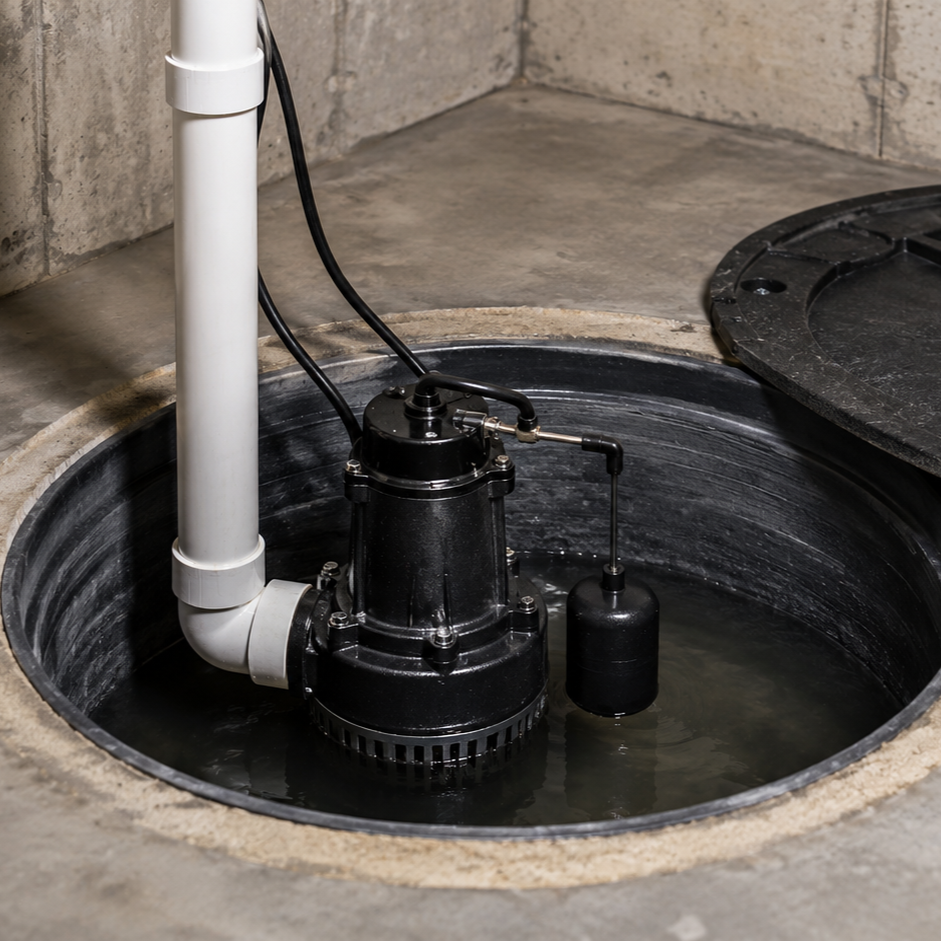
The alarm started sometime after midnight. Flat. Persistent. Coming from below. Your sump pump is sending a signal, and rolling over and going back to sleep is the wrong call.
But the alarm going off doesn't automatically mean water is entering right now. It depends on which alarm it is and what triggered it. Here's what to do in the next few minutes.
A sump pump alarm signals either that the water level in the pit has risen dangerously high (high-water alarm) or that the battery backup has activated or is running low. Check the power, confirm the pump is running, test the float switch, and inspect the discharge line. If the pump is running but water keeps rising, call a plumber immediately.
Do these things right now
Check the power.
Start at the breaker box. Confirm the sump pump's circuit is on. If a breaker tripped, reset it once—just once. If it trips again immediately, leave it alone. Repeated tripping means the pump is drawing excess current, and forcing it back on makes things worse.
If the home lost power and the pump has a battery backup, the backup activating is the system doing exactly what it's supposed to do. The alarm on battery-backup units signals that primary power is gone and the backup has taken over — or that the backup battery is running low.
Check the water level in the pit.
Lift the pit cover and look. A high-water alarm positions its float sensor several inches above the pump's normal on/off range. If water is sitting at or above that float, either the pump isn't running, or it can't keep up with the inflow. Big difference between those two things — so check whether the pump is actually running.
Humming but not pumping, or completely silent?
Test the float switch.
The float switch is the trigger mechanism. Water rises, float rises, float signals the motor to start. Cut power to the pump first, then reach in and lift the float by hand. If the motor starts when the float is raised and stops when it's lowered, the switch works. Look elsewhere. If lifting it does nothing, the switch has failed.
Replacing a float switch costs $50 to $150. The cleanup bill from a flooded crawl space starts at $1,500 and goes up from there.
Check the discharge line.
The discharge line carries water out of the pit and away from the structure. In Phoenix, these lines typically route to a drain installation point clear of the foundation — sometimes through buried PVC. If that line is blocked by debris, a crushed section, or a check valve stuck closed, the pump can run all night without moving a drop.
Walk to where the discharge pipe exits the exterior. Water should be flowing out when the pump runs. The pump is audible, but the exterior pipe is dry? You've found the problem.
Reset the alarm.
After addressing whatever you found, locate the silence or reset button. On standalone high-water units, it sits on the device body. Battery-backup control panels have a dedicated alarm-off button. Hit it, then watch the pit for 30 minutes. Water should drop and hold below the alarm float. If it doesn't, one of the steps above needs another look.
What the alarm is actually telling you
Not every sump pump alarm means the same thing. Two distinct types exist, each pointing to different problems.
A high-water alarm means water has reached the danger point
This sensor mounts near the top of the pit, above where the pump normally cycles. When rising water lifts that float — because the pump failed, inflow overwhelmed it, or the discharge line blocked — the alarm sounds.
Think of it like a backup referee. The pump's own float switch handles normal cycling. The high-water sensor catches the situations where something went wrong before the pump could respond.
In Phoenix, monsoon season (July through September) delivers the heaviest inflow loads. A pump that handles typical drainage without issue may struggle when 1.5 to 2 inches of rain falls in under 30 minutes over compacted caliche soil with almost no absorption capacity.
A battery backup alarm points somewhere different
Battery-backup alarms trigger under a few conditions: the main pump failed and backup engaged, AC power to the main pump was cut, or the battery has drained below the operating threshold.
Backup alarms in dry weather with no power outage almost always point to the battery itself. Most sealed lead-acid units last three to five years nationally. In Phoenix, where battery bay temperatures can hit 110°F in summer, that window often shortens to two to three years. And a battery triggering low-charge alarms repeatedly is done—pushing it further just leaves the home unprotected when it actually needs backup power.
Why the pump stopped working
The float switch
Float switches fail in two ways: stuck raised (pump runs constantly until the motor burns out) or stuck down (pump never starts, pit fills). Usually, it's sediment coating the switch housing, the bracket shifting, or a corroded pivot point. The part is cheap. The consequences of missing it aren't.
The motor
A submersible pump motor runs submerged, cycling on and off through every rain event for years. After seven to 10 years, winding insulation breaks down, impeller housings corrode, and bearings seize. When the motor goes, it either draws power with no output or draws nothing because the thermal overload tripped.
Do not repeatedly reset a pump that keeps tripping its thermal overload. The motor is overheating — blocked impeller, seized bearing, or winding failure. Forcing it to run accelerates the damage and creates a heat risk inside the motor housing.
The discharge line or check valve
The check valve prevents water from draining back into the pit between cycles. A failed check valve lets water flow back constantly, forcing the pump to cycle over and over without making progress. A blocked discharge line does the opposite — the pump strains against the obstruction until the motor labors or the impeller cavitates.
Both conditions produce the same alarm: rising water despite a running pump. But the fix is different for each, and a camera inspection of the discharge line tells you which problem is present.
The pump can't keep up with inflow
A standard ⅓ HP sump pump moves roughly 1,800 gallons per hour. During a Phoenix monsoon event, surface runoff from streets, hardscaped yards, and driveways can overwhelm the system in minutes — especially in lower-elevation lots or properties built over caliche hardpan where water has nowhere to go slowly.
If this happens every monsoon season, repeated resets aren't the answer. A higher-capacity unit, a secondary backup pump, or better surface grading around the structure addresses the actual issue.
When to call a plumber right now
Some situations aren't troubleshooting problems. They're phone calls.
Call immediately if the pump is running but the water level keeps rising. Call if the motor won't start after confirming the float switch and the circuit are both fine. Call if the discharge exit is clear but no water flows out. And call if the pump is making grinding, rattling, or a sustained hum without movement — those are the sounds of a motor failing under load.
A plumber can test motor amperage draw, confirm float switch operation under real load, run a camera down the discharge line if needed, and replace the unit on the same visit when it's failed beyond repair.
Frequently Asked Questions
Dry-weather alarms usually come down to two things: a float switch stuck in the raised position without actual high water, or a backup battery aging out. Push the float down manually — if the alarm stops, the switch is the culprit. If silencing the float changes nothing, check the backup unit's battery readings. A battery reading below 12.4 volts at rest has reached its end of life and needs to be replaced.
Most high-water units have a test/silence button that mutes the tone for a few hours. It buys time, not a solution. The only situation where silencing makes sense without fixing is a confirmed monsoon event in which the pump is running correctly but is briefly overwhelmed — and even then, someone needs to watch the pit. Don't leave the property unattended with the alarm silenced and the cause unknown.
Every three to five years under normal conditions. In Phoenix, plan on two to three years because the summer heat accelerates internal plate degradation. A battery that triggers the low-charge alarm within hours of a full charge is done—replacement runs $80 to $150 for the battery, and a plumber can confirm the charger circuit is working correctly during the same visit.
Mostly no, but close to it. Sediment or debris stuck to the float sensor can keep it raised even when the water level isn't high. A cleaning rag brushed against the float, condensation dripping onto the sensor, or a slow pipe drip nearby can set off a sensitive unit. Pull the float, wipe it down, and check for anything clinging to it. If the alarm sounds again immediately after reinstalling with the float in the correct position, the sensor itself has failed.
Water in the pit rises until it overflows. In a Phoenix home with a crawl space or below-grade utility area, water can reach the wood framing, insulation, and stored materials. Wood absorbs moisture within hours. In the Arizona summer heat, mold can take hold in 24 to 48 hours. Catching a failed pump through aleak detection call the same day limits damage significantly compared to finding the problem three days later.
A typical 12V backup runs a ⅓ HP pump for 5 to 7 hours under normal cycling conditions. During a heavy monsoon event — when the pump cycles frequently to keep up with rapid inflow — that window can shrink to 2 to 3 hours. Battery age matters too: a three-year-old battery in Phoenix summer heat may deliver half its rated capacity. Check the backup's runtime specs at purchase and test it annually by disconnecting primary power and running the pump through a full cycle.
A sump pump alarm that won't stay silenced needs hands-on diagnosis, not repeated resets. Simba Plumbing serves Phoenix, Scottsdale, Mesa, Chandler, Gilbert, Glendale, Peoria, Tempe, Surprise, Goodyear, Avondale, and surrounding Valley communities. (602) 500-2153.
