
How Do I Know If My Water Heater Anode Rod Needs Replacing?
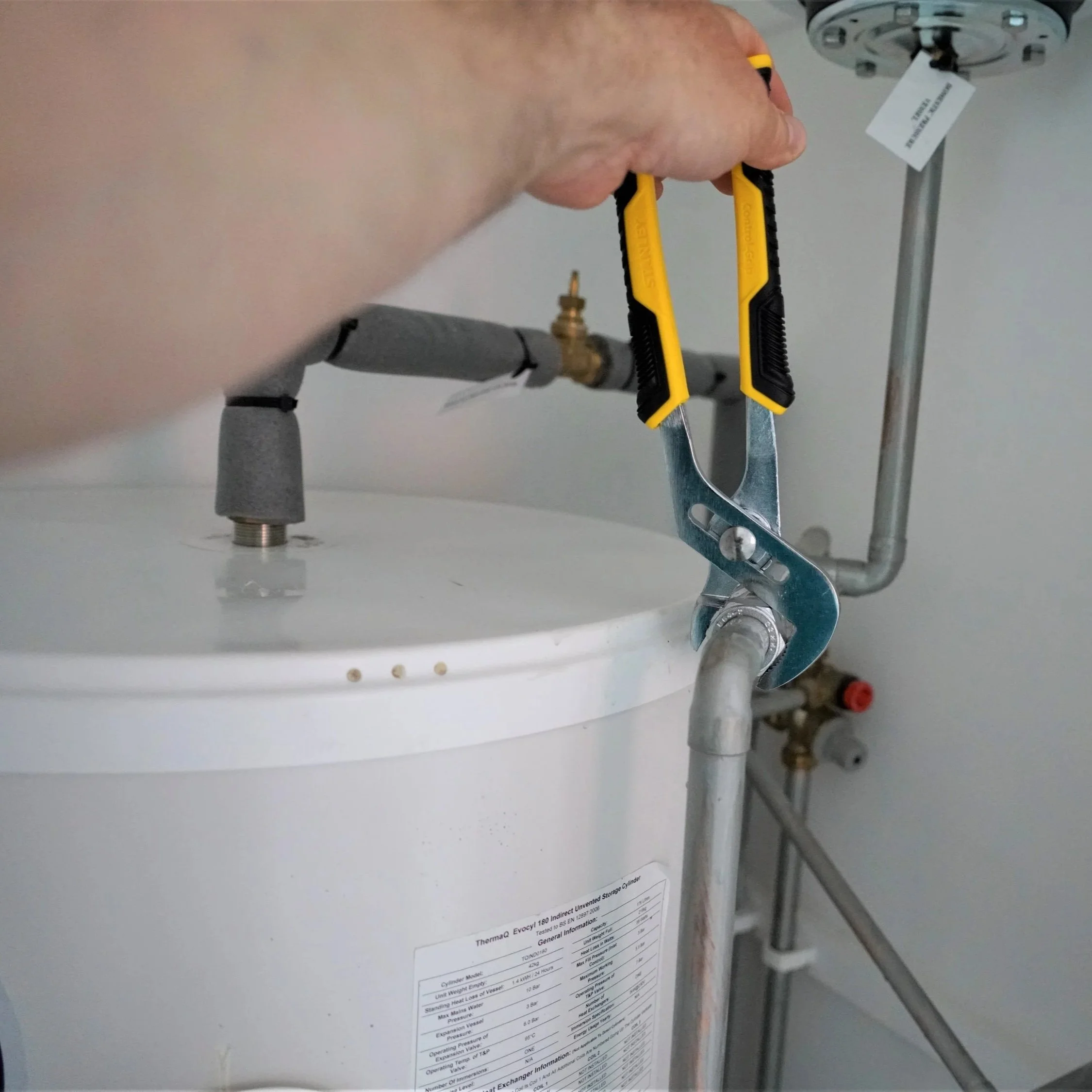
The hot water in the master bath has had a faint sulfur smell for the past few weeks. Not overpowering — just enough to notice when the shower runs. The water heater is only seven years old and heats fine, so it doesn't feel urgent.
That smell is almost always the first signal that a water heater anode rod has expired. Once the rod is gone, the steel tank starts corroding from the inside out.
What an anode rod actually does
A water heater tank is made of steel. Steel and hot water don't coexist indefinitely without protection. Left unguarded, the tank would corrode from the inside within a few years.
The anode rod prevents that. It's a long metal rod — usually magnesium or aluminum — that threads into the top of the tank through a hex-head fitting. The rod is more electrochemically reactive than steel, so when corrosive minerals in the water go looking for metal to attack, they attack the rod instead. The rod sacrifices itself so the tank wall doesn't.
That's not a figure of speech. The rod physically dissolves over time. A new magnesium anode is about 44 inches long and roughly an inch in diameter. After a few years in a hard-water market, that same rod can be reduced to a thin calcium-coated wire — still technically present, but no longer providing meaningful protection.
The sulfur smell is the most reliable sign
Sulfur odor from hot water comes from hydrogen sulfide gas. When a magnesium or aluminum anode rod reacts with water containing sulfate-reducing bacteria, one byproduct is hydrogen sulfide. The smell — often described as rotten eggs — comes specifically from the hot water tap, not cold.
This happens because the rod is degrading faster than it should, or the tank has sat unused long enough for bacteria to establish. Either way, it signals the rod needs attention. Flushing the tank won't eliminate the smell. Inspecting and replacing the rod will.
If the sulfur smell appears from both hot and cold taps, the source isn't the anode rod — it's the water supply itself. Contact the water utility.
Discolored hot water and a metallic taste
Rusty or brownish hot water can indicate two different problems. If it appears after a period of no use — a vacation, extended travel — sediment has likely been disturbed from the bottom of the tank. Running the taps for a minute or two usually clears it.
If the discoloration persists or shows up consistently, the interior of the tank is corroding. That means the anode rod is depleted, the steel wall has been unprotected, and rust is actively shedding into the supply. At that stage, the tank is approaching the end of its service life.
A related sign is a metallic taste in the hot water — not just visual discoloration but flavor. Dissolved metal particles from a corroding tank interior carry through to the tap. If cold water tastes fine but hot water has a distinct metallic quality, the source is the water heater.
Running only the hot water confirms the source. Cold water that runs clear while hot water is discolored points directly at the water heater.
Popping and rumbling sounds signal accelerated rod failure
Sediment buildup at the bottom of the tank — primarily calcium carbonate deposits — creates a separate but related problem. Water heating beneath a thick sediment layer superheats locally and then bursts through, producing a popping or rumbling sound homeowners sometimes describe as rocks tumbling inside the tank.
That sediment is a sign that the water is depositing minerals aggressively. The same mineral load is consuming the anode rod. In hard-water markets, anode rods fail in 3–5 years instead of the 5–10 year range typical in softer-water regions. Valley water typically reads 200–400 ppm total dissolved solids — high enough to consume a standard magnesium rod well before most homeowners think to check it.
Think of a slow-dissolving antacid tablet dropped into two glasses of water. A mild glass takes hours. An acidic glass dissolves it in minutes. Hard water is the acidic glass.
Age alone is reason enough to inspect
The anode rod doesn't trigger a visible alarm when it's spent. No light comes on, no error code appears. But age thresholds make inspection a reasonable default:
Under 5 years: In a hard-water market, the rod is likely still functional but worth confirming at the 3-year mark.
5–8 years: The rod has likely lost significant mass. Inspection is overdue.
Over 8 years: The rod may be gone entirely. The tank is at a higher corrosion risk.
In the Valley, where mineral content sits at the high end nationally, the shorter end of those ranges is the working assumption for any licensed plumber assessing tank condition.
What a plumber finds when checking the rod
Checking the anode rod requires partially draining the tank, locating the hex-head fitting (usually under a plastic cap on top of the heater or beneath the insulating jacket), and removing the rod with a 1-1/16-inch socket.
What comes out tells the full story. A functional rod is solid, intact, and still has meaningful mass. A depleted rod shows heavy calcium coating, significant reduction in diameter, or — at the extreme — just a wire core where most of the metal has gone. The practical threshold: when six or more inches of bare steel core wire are visible along the rod's length, it's past replacement time. Waiting past that point means the tank wall has been unprotected.
Some tanks use combination rods, where the anode is threaded through the hot water outlet dip tube rather than a separate port. Those require identifying the right fitting and are more often overlooked during a basic visual check.
Some tank models include dual anode rods. Check the unit's label or installation manual to confirm how many rods are installed before assuming one inspection covers the full system.
What happens when the rod is never replaced
Once an anode rod is depleted and no replacement goes in, corrosion begins on the steel tank wall. It doesn't happen overnight — but the process is irreversible.
In hard-water conditions, the timeline from depleted rod to tank failure can be a year or two. The tank rarely gives much warning. Persistent rust-colored hot water is usually the last visible signal before the bottom seam starts to weep — and by that point, the interior damage is already done.
A rod itself costs $20–$50. A licensed plumber's time to inspect and swap it runs roughly $100–$200, depending on accessibility. A full tank replacement at $1,000–$1,800 installed makes that comparison easy. A tank that reaches its seventh year without a rod inspection has been running on borrowed time.
Frequently Asked Questions
In hard-water markets like the Valley, every 3–5 years is the standard working interval. In softer-water regions, manufacturers often suggest every 5 years as a baseline. Since most homeowners don't know when the rod was last changed, a plumber can inspect the rod and give a condition-based assessment rather than a calendar one.
Technically, yes. The required tools are a 1-1/16-inch socket, an extension, and a breaker bar. But the rod is installed with factory torque, the tank needs to be partially drained first, and a rod that has been in place for several years is often seized tight. A plumber with an impact driver can remove what a homeowner with a hand ratchet frequently cannot.
Substantially. A tank that's been protected with regular rod replacements can often reach 12–15 years of service life, while a neglected tank in hard water may fail before 10. The rod's sole purpose is to prevent tank corrosion — keeping a functional one in place means the tank isn't corroding.
Yes, but with a specific caveat. Softened water has lower mineral content, which reduces the rod's workload. However, water softened with sodium-based systems can accelerate depletion of aluminum rods in some circumstances. A plumber installing a water softener alongside a tank heater should confirm the correct rod material for the softened water chemistry.
Sulfur — the classic rotten egg odor. It appears only on the hot water side. Running a hot tap that produces the smell while cold water remains odor-free points directly at the anode rod or bacteria interacting with the rod. Flushing the tank can temporarily reduce the smell, but it returns until the rod is inspected and replaced.
If the tank is under 10 years old and structurally sound — no persistent discoloration, no corrosion visible on the exterior, no moisture around the base — a rod replacement makes sense. If the tank already shows signs of interior corrosion, replacing the rod won't reverse damage already done. A plumber can assess whether the tank is worth the service call before performing any work.
No. Tankless water heaters don't store water in a steel tank, so there's no standing water to create the galvanic corrosion that anode rods protect against. The anode rod is a tank-specific component. Homeowners switching from a tank to a tankless system lose that maintenance item entirely, which is one reason tankless units tend to have longer service lives in hard-water markets.
The tank corrodes from the inside out. Persistent rust-colored hot water is typically the first sustained sign. Pinhole leaks eventually form at the seams or base — often first noticed when water appears on the utility room floor. At that point, repair isn't an option. A tank that reaches failure without a rod inspection is usually one that could have gone several more years with routine maintenance.
A licensed plumber can check anode rod condition, assess sediment buildup, and give a clear read on where the tank stands before a slow problem becomes an emergency replacement. Simba Plumbing serves Phoenix, Scottsdale, Mesa, Chandler, Gilbert, Glendale, Peoria, Tempe, Surprise, Goodyear, Avondale, and surrounding Valley communities. ROC #327259 Call (602) 500-2153.
