
Why Tap Water Leaves White Spots (and How to Stop It)
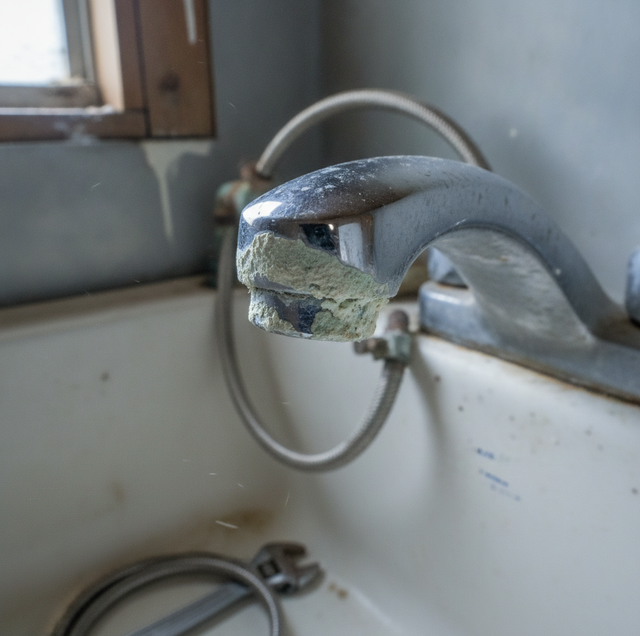
Quick Answer: Those white spots are dried hard-water minerals, mostly calcium and magnesium. When the water evaporates, it leaves the dissolved minerals behind as a chalky film. Wiping helps for a day, but the lasting fix is treating the water itself so the minerals never dry onto the surface in the first place.
You empty the dishwasher, hold a glass up to the light, and there it is again: a hazy scatter of white specks that no amount of hand-drying seemed to prevent. The faucet spout has a crusty ring around the tip. The shower door looks permanently foggy near the bottom. None of it is dirt, and none of it means your cleaning routine is failing. It is a water problem, and once you understand what is actually happening, the fix follows in a fairly logical order.
What the White Spots Actually Are
Tap water is not pure H2O. As it moves through rock and soil on its way to your home, it dissolves small amounts of minerals, and the two that matter most here are calcium and magnesium. Water carrying a lot of these is what plumbers and chemists call "hard" water. The minerals stay invisible while they are dissolved, so the water looks perfectly clear coming out of the tap.
The trouble starts when that water sits on a surface and dries. The liquid evaporates into the air, but the minerals cannot evaporate. They have nowhere to go, so they stay behind on the glass or metal as a chalky white film. Think of it the way a tide pool leaves a rim of salt on the rocks after the sun dries it out: the water leaves, the solids remain. Every droplet that dries on a wine glass, a mirror, or a chrome handle deposits its tiny load of minerals in exactly that spot. Over many cycles, those deposits stack up into a visible crust. This dried mineral layer is commonly called limescale, or just scale.
The harder your water, the more minerals each drop carries, and the faster the spots reappear after cleaning. That is why some households can dry a glass, and it stays clear, while others watch spots form within hours.
Where It Shows Up Around the House
Once you know what to look for, hard-water scale turns up in a predictable set of places:
- Glassware and dishes: Drinking glasses go spotty or take on a permanent cloudy cast. Dishes feel slightly gritty or filmy even after a full wash.
- Faucets and fixtures: A white or greenish crust forms around the base of the spout, on handles, and especially inside the aerator, the small screened tip that the water passes through.
- Showerheads: The spray holes clog unevenly, so the stream splits, sprays sideways, or weakens over time.
- Kettles, coffee makers, and water heaters: A hard, flaky layer builds on any surface that heats water, because heat drives the minerals out of solution faster.
- Soap and shampoo: Hard water fights with soap, so it will not lather well and leaves a sticky film instead of rinsing clean.
That last one surprises people. If you feel like you can never get fully rinsed in the shower, or your soap seems to disappear without producing suds, the water hardness is a likely culprit rather than the soap.
Why It Matters Beyond the Cosmetics
If the spots were only an appearance issue, you could shrug and keep a towel handy. The reason to take hard water seriously is what you cannot see. The same scale that dries onto your glasses also builds up on the inside of pipes, inside the tank of your water heater, and across the internal parts of dishwashers, washing machines, and ice makers.
Inside a water heater, scale settles on the heating surfaces and acts like an insulating blanket. The unit then has to work harder and longer to heat the same water, which quietly raises energy use and shortens the appliance's life. Inside supply lines, decades of gradual buildup narrow the passage the way plaque narrows an artery, reducing flow. None of this happens overnight, which is exactly why it goes unnoticed until an appliance fails early or the hot water never quite keeps up. The cosmetic spots on your glass are really a visible sample of what is coating everything the water touches.
Scale or Etching: Two Different Problems
Before you spend anything on a fix, it is worth confirming that you are actually looking at mineral scale and not permanent glass damage, because the two look similar at a glance and have opposite causes.
Mineral scale sits on top of the surface. It is a deposit, so it can be dissolved and removed. Glass etching is different: it is microscopic damage to the glass surface itself, so nothing you wipe on will bring back the clarity because there is nothing to remove. The glass has been eaten into, not coated.
Here is the two-sided part that trips people up. Hard water causes scale. But its opposite, water that is very soft, can cause etching, especially in a dishwasher running with too much detergent and hot water. So a household with a water softener can still end up with cloudy dishwasher glasses, and the cause there is usually etching, not scale. One problem comes from too many minerals in the water; the other can come from too few, plus an aggressive detergent. Knowing which one you have decides the whole approach, which is why the vinegar test below is worth doing first.
How to Fix It, From Simplest to Most Thorough
The right fix depends on how far you want to go, but the options stack in a sensible order.
Clean what is already coated: For fixtures, showerheads, and aerators, an acid dissolves the mineral deposit. Household white vinegar is the common choice. Unscrew the aerator and showerhead if you can, drop them in a cup or bag of vinegar for a few hours, then scrub the loosened scale with an old toothbrush. For glassware, a vinegar rinse or soak cuts the film. This removes what is there but does nothing to stop it from coming back.
Wipe surfaces before they dry: A squeegee on the shower door and a quick towel-dry of the faucet after use stop droplets from evaporating in place. It is purely preventive and only works if you keep up with it.
Treat the water at the point of use: For drinking and cooking water specifically, a reverse-osmosis (RO) system under the sink pushes water through a fine membrane that strips out dissolved minerals, giving you spot-free water for the kettle and drinking glasses without changing the water for the whole house.
Treat the water for the whole house: The core, lasting solution to hard water is a water softener. This is the one that stops the problem at its source rather than cleaning up after it. A whole-house approach protects the water heater, the pipes, and every appliance at once, not just the glasses you happen to notice.
A Quick Word on Safety
The cleaning side of this is low-risk: vinegar and a toothbrush will not hurt you. The one place to be careful is the water heater. If scale has built up in the tank and you want it flushed, remember the water inside is hot enough to scald. Let the tank cool, or shut it off and give it time before draining, and route the drain hose somewhere the hot water cannot reach anyone. If you are not comfortable working around a hot tank, that flush is a good job to hand to a plumber who can also check whether scale has already shortened the unit's remaining life.
In much of the country, hard water is not a rare complaint; it is closer to the default. Where the supply is quite hard, spotting glasses and crusty fixtures are a normal condition rather than anything unusual about your plumbing. That also means treatment tends to pay for itself in longer appliance life, more than it would in a soft-water region.
Frequently Asked Questions
Do the vinegar test. Dab a little white vinegar on one of the white spots and wait a minute. If it is mineral scale, the acid dissolves the deposit, and the spot wipes clear, leaving clean glass behind. If it is etching, the cloudiness stays put and often shows a faint rainbow sheen when you tilt it to the light, because the damage is in the glass surface itself, and there is nothing on top to dissolve away.
It is mostly calcium and magnesium carbonate. These are the same dissolved minerals that make water "hard" in the first place, and they are what get left behind when the water evaporates off a surface. So the white crust on your faucet is chemically almost the same material as the scale lining your kettle and the deposits in your pipes, just dried in a spot you happen to see.
A true softener actually removes the hardness minerals through a process called ion exchange. Water passes over a bed of resin beads that grab the calcium and magnesium and release sodium or potassium in their place, so the water leaving the softener no longer carries the minerals that cause spots. A "conditioner" or descaler is a different device: it only alters the shape of the mineral crystals so they are less likely to stick, but the calcium and magnesium are still in the water. That distinction matters if spot-free glassware is your goal.
Because that cloudiness is probably etching, and unlike scale, etching is permanent: it cannot be polished or dissolved out once it has happened. It also got more common after dishwasher detergents went phosphate-free, since the newer formulas can be more aggressive on glass in very soft water. That makes the fix preventive rather than corrective. Cut the detergent dose down to the minimum that still cleans, add a rinse aid, and skip the hottest sanitizing cycle on delicate glass, so you stop the etching before it starts instead of trying to remove damage that will not come off.
Often it will. Scale collects in the tiny holes of a showerhead and the fine screen of a faucet aerator, and as those openings clog, both flow and spray pattern suffer. Soaking the parts in vinegar until the deposits dissolve, then rinsing them out, frequently restores the pressure and the even spray you remember. If the flow remains weak after a thorough descale, the restriction is likely elsewhere in the line.
It is truly hard on appliances, and that is the costlier part. Scale coats the heating elements in water heaters and dishwashers, forcing them to run longer to reach temperature, and it narrows the internal passages so units strain against reduced flow. The result is higher running costs and a shorter service life for equipment you expected to last years longer. The spots on your glasses are annoying; the wear on the machinery is the expensive hidden effect.
Book a water-hardness check with our team — get spot-free glasses and appliances that last longer. Simba Plumbing LLC serves Phoenix and the Valley. ROC 327259. Call (602) 500-2153.
