
Signs Your Water Softener Stopped Working (Check This First)
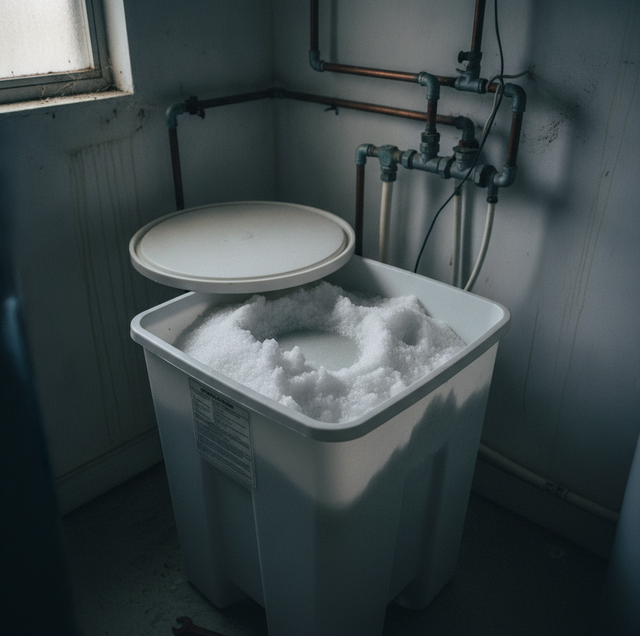
You notice it in small ways before you notice it at all. The shower door spots up again. A towel that came out of the dryer soft last month now feels a little board-stiff. Soap that used to lather with one pump suddenly needs three, and even then, it rinses off, leaving a squeak instead of that slippery feel you got used to. None of it screams "broken." It just creeps back, and one morning you realize your water feels hard again.
A water softener is a fairly simple machine doing one job on repeat. Water flows through a tank packed with tiny resin beads that carry a light charge. As hard water passes over them, the beads grab the calcium and magnesium (the minerals that cause scale and dull laundry) and release sodium in their place. That swap is the whole trick. But the beads only hold so many mineral ions before they fill up, so the unit periodically flushes itself with a strong salt brine, strips the hardness off the resin, sends it down the drain, and reloads the beads with fresh sodium. That flush is called regeneration, and it depends on salt dissolving into brine on a schedule. When the softening stops, the cause is almost always something interrupting that cycle, and a surprising share of the time, you can find it yourself in ten minutes.
What "Stopped Working" Actually Looks Like
The symptoms come back in a cluster, which is your first clue this is a softener problem and not something else in the house. Watch for hard-water spotting on glasses and the inside of the dishwasher, a white chalky film building on faucet aerators and the showerhead face, soap and shampoo that refuse to work up a lather, laundry that comes out stiff or grayish, and a scratchy or filmy feel on your skin after a shower instead of the smooth, almost-cannot-rinse-it-off feel of soft water. Any one of these can have another explanation. All of them arriving together within a week or two points squarely at the softener.
Very hard water makes the shift hard to miss, so a softener that quits doesn't fade quietly. The scale and the spotting announce themselves within days, and you feel the change in the shower almost immediately. That works in your favor as a diagnostic, and it also means a working unit here is doing real, constant labor: the same mineral load that makes a failure obvious is the load that wears these units down year-round, hot months and cool ones alike.
Check These First (No Tools, No Danger)
Before you assume the machine has died, run through the handful of things that account for most "dead" softeners. All of these are homeowner-safe. None of them involves opening the control head or touching wiring.
Look at the salt: Open the brine tank lid and check the salt level. If it's low or empty, the unit has nothing to make brine with, and no brine means no regeneration. Simply running out of salt is one of the most common reasons a softener stops softening. Top it up with the salt type your unit calls for, and run a regeneration cycle to catch up.
Feel for a salt bridge: Sometimes the tank looks full, but the softener still isn't working. A salt bridge is a hardened crust that forms partway up the tank, spanning it like an arch, so the salt sits stranded above the water and never dissolves into brine. The tank reads full while the water underneath stays fresh. High humidity and certain salt types make bridges more likely.
Watch for salt mush: The opposite failure happens at the bottom: fine salt can pack into a dense, muddy layer, sometimes called mushing, that clogs the tank and chokes off proper brine draw. A tank that's been sitting a long time or fed the wrong salt is a candidate.
Confirm it isn't in bypass: Most softeners have a bypass valve so a plumber can route water around the unit during service. If it got left in the bypass position or someone bumped it, your whole house is drinking unsoftened water while the softener sits there perfectly healthy and idle. It's worth a look before anything else.
Check the timer and settings: These units keep a clock and a hardness setting, and both matter. A power flicker or a tripped outlet can reset the controller, preventing it from triggering regeneration or causing it to trigger at the wrong time. While you're there, confirm the hardness setting still matches your water; a setting knocked too low won't clean the resin thoroughly enough to keep up.
If one of those five turns out to be the culprit, you've saved yourself a service call. Refill the salt, break up the bridge, flip the valve out of bypass, or fix the clock, and soft water usually returns within a regeneration cycle or two.
When It's Something Mechanical
If the salt is fine, the tank is clear, the bypass is open, the settings are right, and the water is still hard, then the problem has moved beyond what you can safely reach. Now you're looking at the parts that actually move the water and the brine, and these are pro territory because they sit inside the plumbing and the electrical side of the unit.
The resin itself wears out. Those beads don't last forever; softening resin commonly provides good service for a stretch of years, then loses capacity as the beads break down and can no longer hold a full charge of minerals. Chemistry in the water speeds that up, which matters for how you read a slow decline versus a sudden stop.
The control valve and its motor do the heavy lifting during regeneration, cycling the unit through backwash, brine draw, and rinse. A failed valve, a burned-out motor, or a rotor stuck mid-cycle can leave the softener unable to complete its flush. A clogged injector or venturi, the small nozzle that creates the suction to pull brine out of the tank, is another frequent offender; if it fouls, the unit runs its cycle but never actually draws brine, so the resin never gets cleaned. A cracked or kinked brine line does the same thing from a different angle. In each of these cases, the tell is similar: the machine appears to run, but the resin isn't being recharged, and your salt level may barely move.
Diagnosing this cleanly comes down to two questions. First, is the unit using salt at all, meaning is it actually regenerating? Second, does a water test read hard or soft coming out of the softener? Those two answers together separate an easy fix (salt, bridge, bypass, settings) from a mechanical failure (valve, motor, injector, resin) and tell a plumber where to start. Anything involving the control head internals, the motor, or the household plumbing connections is work for a licensed pro, both for your safety and to prevent a small repair from turning into a flood.
Frequently Asked Questions
Aim to keep the brine tank at least a third to half full, with salt above the water line, so the unit always has enough to make brine. Salt type matters too: solid pellet or block salt bridges far less than fine crystal salt, which packs and arches easily. That crystal-salt bridging is a common reason a tank looks full yet never actually makes brine. Checking the level and noting which salt you are feeding it costs nothing and clears a large share of softeners that seem completely dead.
It's a hard crust of salt that forms an arch across the brine tank, with an air gap underneath, so the salt piled on top never touches the water and never makes brine. The tank looks full, but the softener starves. To find one, press straight down into the salt with a broom handle. If you hit a solid layer with a hollow space beneath it, that's the bridge, and it has to be broken up and cleared so the salt can drop back into the water.
Yes, and it's easy to overlook. Look on the back of the control head for the bypass, which is usually a single lever or a pair of inlet and outlet valves. Turning it back to the 'service' or in-line position routes water through the resin again, restoring soft water. It is worth reaching back and confirming that setting by hand before you assume a part failed, since a bumped valve leaves a perfectly healthy unit sitting idle while the house drinks hard water.
Softening resin often runs somewhere around 10 to 15 years before it needs replacing. Two things shorten that: iron in the water fouls the beads and coats them, preventing them from exchanging minerals, and chlorine chemically degrades the resin structure over time. So a softener that stopped keeping up despite full salt and correct settings may simply have spent resin that no longer holds a charge, especially on older units or water with iron or chlorine present.
Watch or listen for a regeneration cycle, which typically runs on a schedule and audibly sends water to the drain while it runs. The clearest tell over time is the salt level: if the level in the brine tank never drops week after week, the unit isn't consuming salt and therefore isn't regenerating. That points you toward the timer, a power reset that scrambled the clock, or the control valve, rather than at the salt supply itself.
No, that's backward. The slippery, sometimes filmy feel on your skin is normal soft water doing exactly what it should; it's the sensation of soap rinsing cleanly without hard minerals fighting it. The real warning sign is the opposite: if your water suddenly feels like ordinary hard water again, tight and squeaky, that change is what tells you the softener has quit. The softness itself was never the problem.
Book a water softener diagnosis with Simba Plumbing LLC — get soft water back without guessing which part failed. Simba Plumbing LLC serves Phoenix and the Valley. ROC 327259. Call (602) 500-2153.
