Hydro jetting vs drain snake: which is better for clearing clogs?
The kitchen sink backed up for the third time this year. The plumber came out, ran a snake, charged a service fee, and said the drain was clear. Six weeks later, the water is pooling again in the basin. That pattern — recurring clogs after snaking — is exactly the situation where a homeowner needs to understand the difference between a cable machine and hydro jetting, because they are not interchangeable tools. One removes the immediate blockage. The other cleans the pipe.
What a drain snake actually does
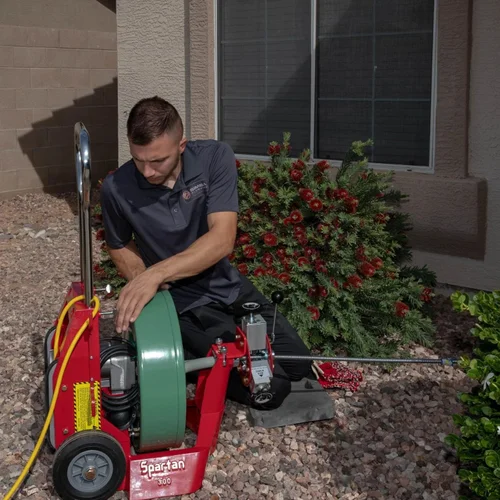
A drain snake, also called a cable machine or drain auger, is a metal cable typically 3/8 to 1/2 inch in diameter. The cable feeds down the drain line, spinning at roughly 600 RPM. When it reaches the obstruction — a grease accumulation, a clump of hair and soap scum, a root intrusion — the spinning tip bores through it.
That's the key phrase: bores through. A snake doesn't scrub the pipe wall. It doesn't clear scale or grease coating from the interior surface. It drills a channel through the blockage wide enough to restore flow, then pulls back out. The pipe walls remain coated with whatever built up to cause the clog in the first place.
Think of it like pushing a finger through a block of mud. The channel opens, but the mud is still surrounding it on all sides.
For a complete soft-material blockage — hair, food debris, a small grease ball — that channel is often sufficient to restore normal drainage. The clog is gone. The pipe works. But when grease has been layering onto the interior surface of the drain line over the years, or when hard water minerals have deposited a rough calcium coating inside the pipe, the snake creates a temporary opening through material that's going to narrow again within weeks.
Cable machines come in different head configurations: cutter blades for grease, auger tips for tangled debris, and root cutters for smaller root intrusions. Each head type handles a different obstruction profile. Even with the right head, though, the physics are the same — penetration, not restoration.
What hydro jetting does differently
Hydro jetting sends pressurized water through the pipe at 3,000 to 4,000 PSI through a nozzle with rear-facing jets and a forward-facing jet. The rear jets propel the nozzle down the line while simultaneously blasting the pipe walls at 360 degrees. The forward jet breaks up the obstruction ahead. The result isn't a hole punched through the clog — it's a pipe that looks close to new on the inside.
Grease that's been coating a 4-inch drain line gets emulsified and flushed out. Calcium deposits from hard water get stripped from the wall. Root intrusions that a snake would only cut partway through get cleared more completely. The water pressure doesn't leave residue. It exits the line carrying whatever was inside it.
A standard hydro jetting setup moves the nozzle through the line at a controlled pace, so the entire length of the treated pipe is exposed to full pressure. Most residential jobs treat 50 to 100 linear feet of drain line.
A camera inspection before hydro jetting lets a plumber confirm the pipe is structurally sound. Hydro jetting at 4,000 PSI against a cracked or severely corroded section can worsen the damage. On pipes in good condition, that pressure poses no problem.
Which jobs belong to a snake
Cable machines are the right call for most routine residential drain calls. A clogged bathroom sink with hair and soap accumulation — that's a snake job. A kitchen drain with a recent blockage from food debris that built up in the P-trap — snake. A toilet that won't clear with a plunger — a closet auger (a specialized form of cable machine) handles it cleanly.
Snaking is also the appropriate response when a pipe's condition is unknown. If a home is older and hasn't had a camera inspection, running 4,000 PSI water through corroded cast iron or deteriorating clay tile creates a real risk. A snake clears the immediate problem with minimal force.
The cost for snaking a residential drain runs roughly $150 to $350, depending on the line accessed and how deep into the system the blockage is. The process typically takes 30 to 60 minutes.
The cable machine is the right call for hair and soap accumulation in a bathroom sink or shower drain, soft food debris caught at a kitchen drain trap, single-fixture backups with no history of recurrence, toilet clogs, and older, uninspected pipes where the condition is uncertain and a camera run hasn't been done yet.
Which jobs require hydro jetting
Hydro jetting addresses what cable machines leave behind. When a drain clogs repeatedly — the same drain, every few months — the pipe wall is the problem, not the individual blockage. Snaking keeps cutting holes through material that re-accumulates on the coated wall surface. Jetting strips the wall.
In the Valley, grease-coated kitchen drain lines are the most common hydro jetting application. Cooking grease doesn't dissolve in cold water. It adheres to the interior surface of drain pipes in layers, hardening as it cools. The coating narrows the effective diameter of the line — a 4-inch drain line with a quarter-inch of grease on the wall operates like a 3.5-inch line. With each cooking cycle, the coating thickens slightly. Eventually, the line fails.
Hard water accelerates the problem in ways that don't happen in most other markets. At 300 to 500 ppm total dissolved solids, Valley water deposits calcium and magnesium scale inside pipes the same way it does on showerheads and faucet aerators. That mineral layer creates a rough interior surface that grease and debris adhere to more aggressively. A line that would self-clear in a low-mineral market needs periodic jetting here.
When slow drainage appears in multiple fixtures at the same time — the kitchen sink, bathroom sink, and shower all draining steadily — the problem isn't in any individual branch line. It's in the main sewer lateral serving the house. That's a hydro jetting job, not a snake job. A cable machine that reaches 50 feet into a 4-inch line won't address accumulation along the full length of a lateral, which may run 60 to 100 feet to the city connection.
Root intrusions in sewer laterals also respond better to jetting than snaking. A cable root cutter clips roots at the penetration point but leaves the root mat inside the pipe. Hydro jetting at 4,000 PSI pushes the root material out of the line entirely and flushes the debris to the sewer main. The result holds longer.
Cost for residential hydro jetting runs $350 to $700 for a single line, higher for sewer lateral work or systems requiring a camera inspection. Jobs typically take one to two hours. On a kitchen drain line with no structural issues, jetting typically holds for 12 to 18 months under normal household cooking.
| Situation | Best method | Why |
|---|---|---|
| Hair/soap clog, first occurrence | Snake | Soft material, single event |
| Grease accumulation, recurring kitchen drain | Hydro jet | Wall coating, not just a blockage |
| Root intrusion, sewer lateral | Hydro jet (after camera) | Clears root mass, not just the channel |
| Toilet clog | Closet auger | Correct tool, low force |
| Unknown pipe condition, older home | Snake first | Camera before jetting |
| Calcium scale accumulation on drain walls | Hydro jet | The only method that strips mineral deposits |
When the wrong method causes problems
Snaking a drain that needs jetting produces the cycle homeowners recognize: the drain clears for a few weeks, then clogs again. Each snake job removes the blockage's center but leaves the wall material, causing the restriction. After a few rounds of this, a plumber doing a camera inspection will find a 4-inch line that looks substantially narrowed by layered accumulation.
Running hydro jetting on a pipe that should have been snaked first is a different problem. If the obstruction is a solid object — a toy, a loose fitting, or something that shouldn't be in the drain — high-pressure water won't remove it. It'll push it deeper into the system, possibly past a cleanout access point where the only option is excavation. That's why camera inspection is standard practice before jetting a line with an unknown blockage history.
Hydro jetting is not appropriate for pipes with active cracks, significant corrosion, or deteriorating joints. The pressure that cleans a healthy pipe can open a failing section into a full collapse. A camera inspection before jetting eliminates that risk.
What a camera inspection adds to the decision
A camera run through a drain line takes 20 to 45 minutes and answers the questions that determine the right method. It shows whether accumulation is a wall coating or a discrete obstruction. It identifies root intrusions, pipe offsets, separated joints, and sections where the pipe material is compromised. With that information, a plumber can match the method to the actual condition of the line — not just the symptom.
On a line with a clean interior and a discrete clog, snaking is the efficient choice. On a line showing wall accumulation, offset joints that are still intact, and no structural compromise, jetting is the method that actually solves the problem. Camera inspection removes the guesswork.
In the Valley, older homes with cast iron drain lines are common candidates for inspection-first diagnosis. Cast iron corrodes from the inside, creating a rough surface that collects debris aggressively. It also develops scale accumulation that looks similar to grease coating on the camera. A plumber who can see the interior makes a better call than one working from symptoms alone.
Frequently Asked Questions
Hydro jetting is safe for pipes in good structural condition — PVC, ABS, copper, cast iron without significant corrosion, and most clay tile in good repair. It's not appropriate for pipes with active cracks, deteriorating joints, or sections that are already failing. A camera inspection before jetting confirms the pipe is in condition to handle the pressure.
For kitchen drain lines in homes that cook regularly, annual jetting keeps grease accumulation from accumulating to the point of blockage. For homes with hard water and no softener, the same interval applies to lines showing mineral deposit accumulation. Sewer laterals with root intrusion history may need jetting every one to two years, depending on how aggressively the trees are growing.
No. Snaking is the right tool for soft, discrete blockages — hair, food debris, recent clogs in lines that drain normally most of the time. Hydro jetting is better for recurring clogs, wall accumulation, root intrusions, and grease-coated kitchen lines. The method should match the actual problem, not default to the more aggressive option.
The main signal is recurrence. A drain that clogs once and stays clear after snaking was a discrete blockage. A drain that clogs repeatedly after snaking — especially a kitchen drain — almost always has wall accumulation. A camera inspection confirms it.
Yes. Hydro jetting removes the coating that's narrowing the effective pipe diameter, which restores full flow even when the drain hasn't fully backed up. Addressing it before the line fails is more convenient and usually less expensive than emergency service after a complete backup.
Power rodding is essentially a heavier-duty version of cable snaking, using a larger, stiffer cable with more aggressive cutting heads. It's effective for root intrusions and harder obstructions where standard snake cables don't have enough torque. It still doesn't clean pipe walls the way hydro jetting does. Power rodding removes obstruction; hydro jetting restores the interior of the pipe.
Chemical drain openers (caustic or acidic formulations) can soften soft organic clogs temporarily. They don't remove grease coating from pipe walls, don't cut roots, and don't strip mineral deposits. Repeated use damages PVC and ABS pipes over time and corrodes older metal lines. They're a temporary measure at best and should not replace mechanical drain cleaning for recurring problems.
Whether a recurring kitchen backup needs jetting or a simple clog needs clearing, a licensed plumber can assess the line and use the right method. Simba Plumbing serves Phoenix, Scottsdale, Mesa, Chandler, Gilbert, Glendale, Peoria, Tempe, Surprise, Goodyear, Avondale, and surrounding Valley communities. (602) 500-2153.
