
How Much Does It Cost to Repipe a House?
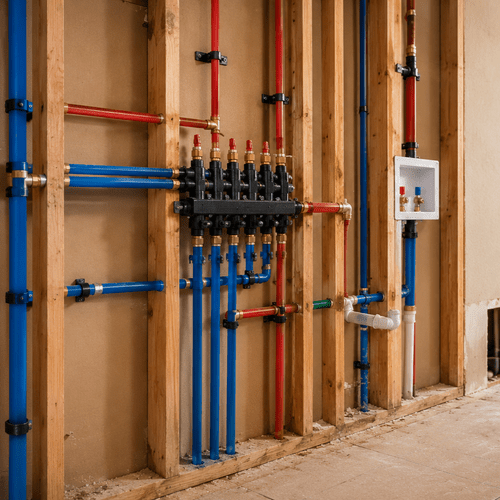
The phrase "whole-house repipe" lands on a homeowner like a diagnosis they were not ready to hear. The work is disruptive, the quotes are five figures, and the timeline — typically two to four days — means no running water while a crew works through every wall in the house. But for a Valley home built before 1995 whose copper or galvanized pipes have been fighting Phoenix water for three decades, repiping is often the difference between ongoing spot repairs and a plumbing system that will hold for another 40 years.
Here is what the work actually costs, what drives the price up or down, and what Phoenix-specific conditions change the calculation.
What whole-house repiping means
Repiping replaces all the water supply lines inside a home — the pressurized pipes that deliver hot and cold water to every fixture. It does not typically include the drain, waste, and vent (DWV) system or the main water service line from the street, unless those are separately condemned.
The process involves opening walls and ceilings to access and remove the old pipe runs, installing new pipe from the main shut-off to every fixture connection, pressure-testing, patching the wall openings, and scheduling a municipal permit inspection before drywall work is finalized. The permit and inspection are not optional — they protect the homeowner's insurance position and document the work for resale disclosures.
Phoenix repipe cost ranges by home size
In the Phoenix Valley, here are typical whole-house repipe cost ranges as of 2025:
| Home size | PEX repipe (installed) | Copper repipe (installed) |
|---|---|---|
| Under 1,000 sq ft (1–2 bed) | $4,500–$7,500 | $6,500–$11,000 |
| 1,000–1,800 sq ft (2–3 bed) | $6,000–$10,000 | $9,000–$14,000 |
| 1,800–2,800 sq ft (3–4 bed) | $8,000–$13,000 | $12,000–$18,000 |
| 2,800–4,000 sq ft (4–5 bed) | $11,000–$17,000 | $16,000–$24,000 |
These ranges include labor, materials, permit fees, and basic drywall patching (typically paper-and-joint-compound finish, not texture match or painting). Full texture match and painting are typically quoted separately.
Labor accounts for approximately 65–70% of most repipe jobs. Material costs are a secondary driver — PEX piping runs $0.50–$1.50 per linear foot versus $3–$8 per foot for Type L copper. On a 1,500-square-foot house with roughly 200–300 linear feet of supply line, that material differential compounds into a $1,500–$3,500 swing between PEX and copper for the same job.
PEX vs copper: the material decision for Phoenix homes
PEX (cross-linked polyethylene)
PEX has become the dominant choice for whole-house repiping in Phoenix for several reasons beyond cost:
Scale resistance. PEX does not corrode or react with the calcium and magnesium compounds in Phoenix water. The interior bore stays smooth. Copper, by contrast, develops scale on the interior wall that can narrow flow over the years and, in particularly aggressive water chemistry, can cause pinhole leaks at the scale buildup sites.
Installation speed. PEX is flexible and runs in continuous lengths from a central manifold to individual fixtures — a configuration called "home-run" that eliminates the inline fittings that are the most common failure points on copper. Fewer joints means fewer potential leak sites. It also means a faster install, which reduces labor costs.
Thermal expansion. Phoenix summers push slab and attic temperatures well above ambient air. PEX's flexibility accommodates thermal expansion without the stress cracking that affects rigid copper in high-heat-cycle environments.
The limitation: PEX cannot be installed in exposed outdoor locations or anywhere with direct UV exposure. For exterior hose bibs or exposed riser sections, a copper or CPVC segment is used.
Copper (Type L)
Copper remains the premium material choice when long-term resale value or buyer perception matters, and for homeowners with water softening already in place (which significantly reduces copper's corrosion risk). A properly installed copper repipe with softened water will last 40–70 years. The material cost premium runs $2,000–$5,000 more than PEX on a typical Valley home, and the installation takes longer due to soldering requirements.
For Phoenix homes with no water softener and no plan to add one, PEX is the more practical choice. Copper's longevity advantage only materializes with mineral control. Without it, Phoenix water attacks copper fittings and exposed sections at a faster rate than the national average.
What adds cost in a Phoenix repipe
Slab homes. A significant share of Phoenix Valley homes built between 1960 and 1985 have copper supply lines embedded in or under the concrete slab. When those lines develop pinhole leaks — which happens in Phoenix's hard water and alkaline soils — there are two approaches: (1) cut the slab and replace the in-slab lines, which adds $2,000–$5,000+ in concrete work; or (2) abandon the in-slab lines and reroute new PEX through the attic and down interior walls, which avoids the concrete cut entirely. Most Phoenix plumbers prefer the overhead reroute for whole-house jobs — it's faster, avoids soil disturbance, and the attic route is far more accessible for future repairs.
Two-story homes. Each vertical chase (pipe run from one story to the next) requires additional time and access work. Expect a 20–30% premium on a two-story home versus a single-story home of comparable square footage.
Polybutylene pipe identification. Homes built in Phoenix between roughly 1978 and 1995 may contain polybutylene (PB) pipe — a gray, flexible plastic that was installed widely before its tendency toward sudden failure became known. PB reacts with chlorine in municipal water, developing internal fractures that eventually cause catastrophic splits. When a Phoenix home repiped because of polybutylene, the removal requires extra care to handle the material cleanly, and the job typically commands a 10–15% premium over a standard copper or galvanized removal.
Post-repipe drywall and texture. The patches required after a repipe — typically 4-by-8-inch to 12-by-12-inch openings at each fixture location and along wall chases — need finishing work before painting. Basic patching is often included in the repipe quote. Matching existing orange-peel or knockdown texture (nearly universal in Phoenix-area construction) requires a separate drywall contractor or an add-on scope, typically $500–$2,500 depending on the number of patches.
Water softener installation at repipe time. If a softener is not present, repipe time is the logical moment to add one — the main line is already cut and accessible, the permit is already pulled, and adding the softener loop adds minimal labor. Whole-home softener installation at repipe adds $800–$1,800 to the total, depending on system capacity.
What is typically not included
Main water service line from the street to the house (separate scope, $2,000–$6,000+ depending on depth and distance)
Drain, waste, and vent lines
Water heater replacement (though this is a common add-on at repipe time)
Water meter or pressure regulator replacement (though a PRV should always be inspected at repipe — if the old piping suffered from 100+ PSI supply pressure, the new pipes need proper pressure regulation to get the expected lifespan)
Gas lines
The Phoenix permit and inspection process
Whole-house repiping requires a plumbing permit in all Phoenix Valley jurisdictions — Phoenix, Scottsdale, Mesa, Chandler, Gilbert, and the others. The licensed plumber pulls the permit before work begins. At substantial completion, a licensed inspector from the city or county verifies that the new piping meets current plumbing code before the walls are closed.
This is not bureaucratic overhead — it is a documented record that the home's plumbing was replaced to code at a specific date, which is a material fact in any future sale. Buyers' inspectors specifically ask about permitted work; a repipe done without permits can trigger renegotiation or mandatory remediation at resale.
Permit fees in Phoenix Valley municipalities typically run $150–$400 for a residential repipe. They are generally included in a licensed plumber's quote.
Repipe proposals that omit any mention of permits, or that price the job significantly below the ranges above, warrant scrutiny. The two most common sources of below-market pricing on repipes are omitting the permit entirely (illegal and a resale liability) and using unlicensed labor. Arizona requires licensed contractors for any work on the water supply system.
How long does a whole-house repipe take?
For a 1,500–2,500 square foot single-story Phoenix home, a crew of two licensed plumbers typically completes the rough-in (pipe installation) in one to two days. Pressure testing and inspection add a day. Drywall patching by a separate contractor adds one to two additional days after inspection clearance.
During the rough-in phase, water to the house is turned off. Most plumbing contractors stage the work to restore partial water service at the end of each working day — enough for the kitchen and at least one bathroom — and achieve full restoration at rough-in completion.
Timing a repipe: signs the house needs it
A whole-house repipe is indicated when:
Multiple pinhole leaks have appeared in copper lines within a two- to three-year window. One pinhole is a spot repair. Three pinholes in different locations in 18 months is a systemic problem.
Water pressure has dropped across the whole house — not just one fixture — without a change in supply pressure at the meter. Internal scale narrowing the bore diameter is the mechanical cause.
The home has a polybutylene pipe and is past 20 years of service, or has already had one PB failure event.
Galvanized steel lines are present (homes pre-1970, typically). Galvanized pipe has a 40–70 year lifespan under normal conditions, and considerably less in Phoenix's alkaline water chemistry.
A slab leak has been detected, and the plumber's evaluation indicates additional vulnerable sections elsewhere in the slab.
Frequently Asked Questions
Whole-house repiping in the Phoenix Valley typically runs $4,500–$13,000 for PEX pipe and $6,500–$18,000 for copper, depending on home size and complexity. Single-story homes under 1,800 square feet sit at the lower end; large two-story homes with slab pipe re-routes land at the upper end. These ranges include labor, materials, permit fees, and basic wall patching.
For most Phoenix households without a water softener, PEX is the better material choice. Phoenix's hard water (200–400 ppm TDS) attacks copper fittings and can cause pinhole leaks at scale accumulation sites. PEX is chemically inert to the calcium and magnesium compounds in Valley water, does not corrode, and accommodates the thermal expansion cycles that Phoenix's extreme summer temperatures create in rigid pipe. Copper performs well when paired with a water softener.
A two-plumber crew completes rough-in on a 1,500–2,500 square foot single-story Phoenix home in one to two days. Inspection and pressure testing add another day. Drywall patching typically runs one to two additional days after inspection clearance. The total timeline from permit pull to finished walls is usually four to seven business days.
No. A standard whole-house repipe replaces only the water supply lines — the pressurized pipes that deliver hot and cold water. Drain, waste, and vent (DWV) lines are a separate scope. If both supply and drain lines need replacement, expect a higher quote and longer timeline.
Most Phoenix plumbers reroute new supply lines through the attic and down interior walls rather than cutting the slab, which avoids concrete removal costs and disturbing the expansive clay soil conditions common in the Valley. The in-slab lines are typically abandoned in place (capped and depressurized) rather than excavated. This approach is code-compliant and preferred by both plumbers and homeowners.
Replacing old polybutylene, galvanized, or severely deteriorated copper pipes with new PEX or copper typically improves the home's insurance risk profile. Some carriers reduce premiums for updated plumbing or remove coverage exclusions that applied to the old materials. Homeowners should notify their carrier after a permitted repipe and provide the inspection record.
In Phoenix, yes. Repipe time is the most cost-effective window to add a whole-home softener because the main line is already cut and accessible for the softener bypass loop. A softener added at repipe typically costs $800–$1,800 in labor and materials beyond the repipe itself — considerably less than a standalone softener installation later. The softener then protects the new piping for its full lifespan.
Simba Plumbing provides free, itemized repipe estimates with full permit and inspection coordination. Licensed technicians assess pipe material, slab conditions, and access before quoting — no guesswork. Simba Plumbing serves Phoenix, Scottsdale, Mesa, Chandler, Gilbert, Glendale, Peoria, Tempe, Surprise, Goodyear, Avondale, and surrounding Valley communities. (602) 500-2153.
