
How Long Does a Water Heater Typically Last?
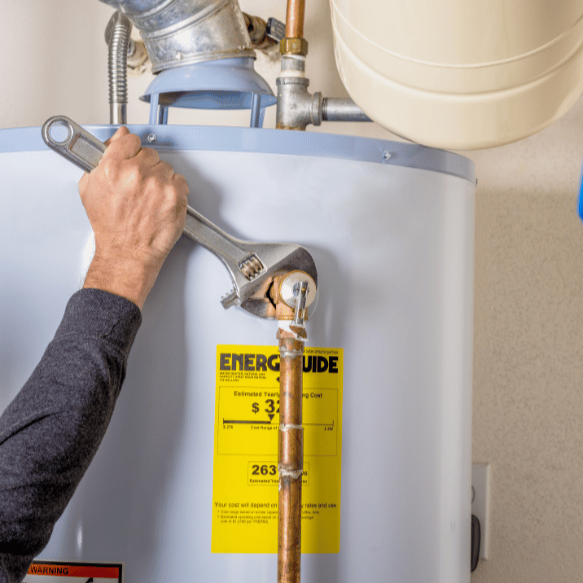
The sticker on the side of the water heater shows a manufacture date from twelve years ago. The unit hums along in the garage, making enough hot water — for now. Planning a replacement feels premature. Waiting for something to break feels reckless. That's the question plumbers hear more than almost any other.
The number of years matters less than understanding what actually wears a water heater out.
How to find a water heater's age
The manufacture date isn't printed plainly on most units — it's encoded in the serial number. Major brands embed the production date in the first few characters: Rheem uses a letter for the month (A = January, L = December) followed by two digits for the year. A serial starting with "F19" was made in June 2019. A.O. Smith and State typically open with a two-digit year code followed by a letter or digit for the month. Bradford White uses a proprietary two-character system — the manufacturer's website has a decoder.
The nameplate is usually in the top third of the unit or behind the access panel. If the serial number has worn off, a permit pull history or home inspection report often records the installation date.
How long do different water heaters last
Lifespan varies significantly by type. A gas tank unit in a hard-water market ages out faster than a tankless unit with identical water conditions and maintenance habits.
| Water heater type | Typical lifespan |
|---|---|
| Gas tank | 8–12 years |
| Electric tank | 10–15 years |
| Tankless (gas or electric) | 15–20+ years |
| Heat pump | 10–15 years |
Tank-style units age the way they do because the storage tank is in constant contact with water. Every gallon that cycles through deposits a small amount of calcium and magnesium on the tank floor. That mineral layer insulates the tank bottom from the burner, forcing the heating element to work harder to push heat through the crust. The metal flexes and stresses with each heat cycle. Eventually, the glass lining cracks, rust takes hold, and the tank begins to weep.
Tankless units don't store water — they heat it as it passes through a heat exchanger. Without a static tank, there's no slow mineral accumulation against metal walls. The heat exchanger and burner assembly still wear, but the failure mechanism is different and slower.
The lifespan ranges above reflect national averages. In hard-water markets where total dissolved solids run 200–400 ppm, tank water heaters routinely reach the lower end of their expected range — 8–10 years — without consistent maintenance. A water softener doesn't just improve water quality; it can add two to four years to a tank's working life.
What actually shortens a water heater's life
Hard-water sediment attacks the tank floor
Calcium and magnesium in the water supply don't stay dissolved when the water heats up. At temperatures above about 130°F, dissolved minerals precipitate out and settle as a white-gray crust on the bottom of the tank — like the scale that forms inside a kettle, except in a 40- or 50-gallon tank, the layer can grow to half an inch or more over several years.
That layer is an insulator. The burner runs longer and hotter to push the same amount of heat into the water. The metal at the bottom of the tank is repeatedly overheated. This is why older tanks in hard-water markets emit the popping and rumbling sounds homeowners describe — water trapped beneath the sediment layer boiling and forcing its way through.
Anode-rod depletion lets rust in
Every tank water heater ships with a magnesium or aluminum anode rod threaded into the top. The rod corrodes preferentially — the electrochemical reaction attacks the rod instead of the steel tank lining. As long as the anode rod has material remaining, the tank is protected.
In hard-water markets, anode rods deplete faster. The standard replacement interval is every 3–5 years nationally, but a plumber inspecting a rod in a 200+ ppm water market may find it reduced to a thin wire core in three years or less. Once the rod is gone and not replaced, the tank lining begins to corrode from the inside. By the time rusty water appears at the hot tap, the corrosion is already well advanced.
High water pressure stresses fittings and the tank
Residential supply pressure is supposed to stay between 40 and 80 PSI. Above 80 PSI, constant high-pressure cycling stresses the pressure-relief valve, the inlet and outlet connections, and the tank walls. Homes with an aging or failed pressure-reducing valve often run between 90 and 120 PSI with no visible sign — until fittings begin to weep or the relief valve starts drip-releasing.
A water heater living under chronic high pressure fails faster. Not from sediment or rust alone — from stressed connections and premature valve wear that stack on top of everything else.
Skipped maintenance accelerates everything
Annual flushing removes sediment before it hardens. Anode rod checks every three years, keep tank protection in place. A temperature setting of 120°F means the burner isn't overworking. Skip any of these long enough, and those wear mechanisms run unchecked.
A water heater that's never been flushed in twelve years is not in the same condition as a twelve-year-old unit that's had annual service. Age alone doesn't tell the whole story.
Signs that a water heater is nearing the end
Rumbling or popping during heating cycles. Hardened sediment is being disturbed as water beneath it boils. A tank that has reached this stage rarely benefits from flushing — the sediment is often bonded to the tank floor, and disrupting it can accelerate valve failure.
Rusty or reddish water at hot fixtures. Cold water running clear while hot water carries visible rust points to corrosion inside the tank, not in the supply pipes. This is a replacement signal, not a repair situation.
Water pooling at the tank base. A persistent wet ring or standing water around the base indicates the tank is weeping from a seam or pinhole rust-through. Tank leaks are not repairable. Delay risks a full tank failure and significant water damage to the surrounding area.
Hot water running out faster than before. As sediment fills the lower portion of the tank, effective storage capacity shrinks. A 50-gallon tank with four to five inches of sediment may function closer to a 35-gallon unit. If household demand hasn't changed but the supply is running short, sediment accumulation is the likely cause.
The unit is past ten years old, and any repair estimate exceeds half the replacement cost. This is the standard decision threshold. A ten-year-old tank with a failed heating element may still be worth repairing. A twelve-year-old tank showing rust at the connections, reduced capacity, and a depleted anode rod is at the end of its service window, regardless of what any single repair costs.
Maintenance that extends tank life
Annual flushing. Draining one to two gallons from the drain valve at the tank base removes sediment before it hardens into a bonded layer. For tanks that have never been flushed, starting a flushing regimen after years of neglect can loosen sediment that was previously stable, temporarily worsening water quality. A plumber should assess the tank's condition before flushing a long-neglected unit.
Anode rod inspection every three years. If the rod is reduced to a thin core or coated so heavily in calcium deposits that the magnesium is consumed, it needs replacement. A single service visit handles this, and it adds meaningful time to tank life.
Temperature set at 120°F. Higher temperatures accelerate mineral precipitation and stress the tank bottom. Lower settings create conditions favorable to bacterial growth in standby water. 120°F is the established target.
Expansion tank on closed systems. Homes with a pressure-reducing valve or backflow preventer on the supply line have a closed plumbing system. When water heats and expands inside the tank, pressure has nowhere to go — spikes hit on every heating cycle. An expansion tank absorbs that pressure and reduces stress on the water heater and all connected fittings. A plumber can verify whether a home needs one by checking static supply pressure with a gauge.
When to replace instead of repair
Age and failure type drive the decision. Repair cost is the tie-breaker.
A unit under eight years old with a failed component — a heating element, a thermostat, a dip tube — is generally worth repairing. These parts are designed to be replaced. A healthy tank with a failed component is not a failing tank.
A unit over ten years old, where the tank itself is showing signs — corrosion at seams, weeping at the base, rust in the hot water — should be replaced. No repair addresses internal corrosion. A new anode rod and a flush will not restore a tank that's already rusting through its lining.
The 50% threshold: if the repair cost exceeds half the cost of a new installation, replace regardless of age. This applies most clearly to units in the 8–12 year window where the decision isn't obvious.
And when replacing, the type decision matters. Tankless units cost more upfront — typically $1,200–$3,000 installed versus $800–$2,000 for a tank unit — but their 15–20 year service life and lower operating costs make them worth evaluating, particularly for households with consistent, high hot-water demand.
Frequently Asked Questions
The manufacture date is encoded in the serial number on the unit's nameplate. Rheem uses a letter for the month followed by two digits for the year. A.O. Smith and State embed a two-digit year code early in the serial. Bradford White uses a proprietary two-character system — the manufacturer's website has a decoder. If the nameplate has worn off, a home inspection report or permit history often records the installation date.
That is the national average for gas tank units, but the actual range runs from about 6 to 15 years, depending on water quality, maintenance history, and supply pressure. In hard-water areas where total dissolved solids exceed 200 ppm, unmaintained tanks frequently fail at 8–9 years. Well-maintained tanks in moderate water conditions can reach 12–14 years. Tankless units routinely reach 15–20 years.
Tank units occasionally do, but it requires consistent maintenance — annual flushing, regular anode rod replacements, and moderate water quality. Most tank units don't get that level of care. A 15-year-old tank that still produces hot water is worth inspecting before it fails, not running until it leaks.
The anode rod is a metal rod — magnesium or aluminum — threaded into the top of the tank. It corrodes preferentially: the electrochemical reaction attacks the rod instead of the steel tank lining. Once the rod is fully depleted and not replaced, the tank begins to corrode from the inside. In hard-water markets, rods can deplete in three years or less. Replacing the anode rod is the highest-impact maintenance task for extending tank life.
Not automatically, but an inspection is warranted. A plumber can check the anode rod condition, assess sediment accumulation, and look for early corrosion at the connections and tank base. If the rod has material remaining and the tank shows no rust, two to three more years of service may be reasonable with continued maintenance. If the rod is depleted and the tank shows early internal corrosion, getting ahead of failure is the better financial move.
It depends on where the leak originates. Leaks from fittings, the pressure-relief valve, or supply connections are repairable. A leak from the tank body — a pinhole rust-through at the base or along a seam — is not. Once the tank wall is breached, replacement is the only option.
For a standard tank unit, installed cost typically runs $800–$2,000, depending on tank size, fuel type, and whether modifications to venting or gas lines are required. Tankless units generally run $1,200–$3,000 installed. Emergency replacements — nights, weekends, and same-day service — carry a premium over scheduled installations. Planning a replacement before failure happens saves on the urgency markup.
Licensed plumbers assess anode rod condition, sediment accumulation, and tank integrity to give an honest evaluation of remaining service life. Simba Plumbing serves Phoenix, Scottsdale, Mesa, Chandler, Gilbert, Glendale, Peoria, Tempe, Surprise, Goodyear, Avondale, and surrounding Valley communities. ROC #327259. Call (602) 500-2153.
