
Do Older Homes Still Have Polybutylene Pipes and When Should They Be Replaced?
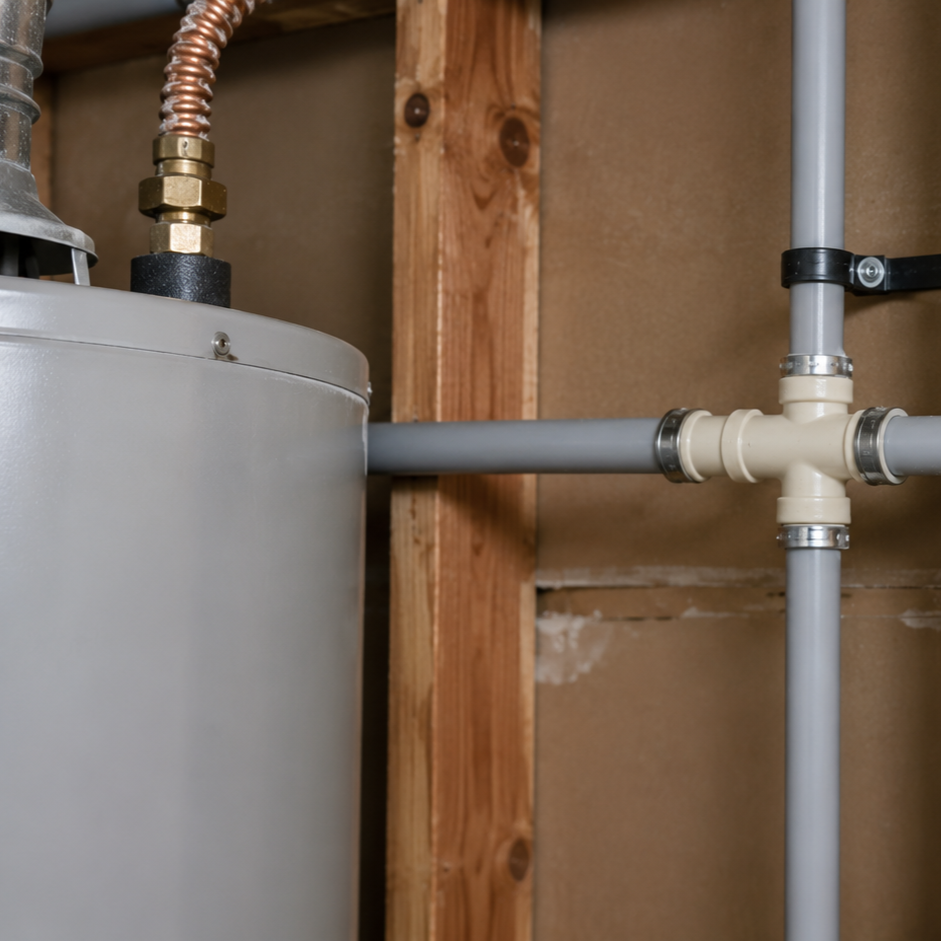
The gray plastic pipe behind the water heater looked fine. No drips, no staining, no soft spots in the drywall. The homeowner had lived with it for 18 years without a single problem. Then the fitting under the bathroom sink let go at 2 a.m. — water through the cabinet, across the tile floor, into the subfloor below.
The pipe was polybutylene. The house was built in 1987. Nothing on the outside had suggested a problem was coming.
That's the danger with PB pipe. It gives no warning.
Yes — millions of U.S. homes built between 1978 and 1995 still have polybutylene (PB) pipe. PB reacts with chlorine in municipal water, causing the pipe walls to degrade from the inside out. Most plumbers recommend replacing PB as soon as possible, particularly in systems that are 25 or more years old. The Valley's hard water accelerates the timeline.
Polybutylene was everywhere between 1978 and 1995
Polybutylene is a flexible plastic resin that dominated residential plumbing installations from the late 1970s through the mid-1990s. Cheap to manufacture, light, and faster to install than copper — builders loved it. Sun Belt developers building homes across the Valley used it constantly through the late 1980s and early 1990s.
The U.S. total runs to roughly 10 million homes. A class-action settlement in 1995 paid out about $1 billion to homeowners who'd suffered damage. Production stopped that year.
But the pipes didn't come out. They're still there.
Any home built between 1978 and 1995 that hasn't had its plumbing updated is a candidate for polybutylene. That covers a large portion of the Valley's housing stock — neighborhoods that grew fast during exactly those years.
Identifying polybutylene before it becomes a problem
PB pipe doesn't look like copper or PVC. A homeowner who knows what to look for can check the most visible sections of plumbing in about 10 minutes.
Most PB pipe is gray. It also appears white, black, or blue — the blue is primarily outdoor and irrigation runs. It's flexible and curves rather than running in rigid straight lines. Most pipe is stamped with the code "PB2110" along its length. Diameter runs from ½ inch to 1 inch.
The easiest places to check: near the water heater where supply lines connect, under bathroom and kitchen sinks at the stub-outs, in any unfinished garage or utility space, and at the main shut-off valve near the water meter.
One important detail. Some homes were built with mixed materials — copper visible at fixtures while polybutylene runs behind walls and into the slab. Finding copper at the sink doesn't rule out PB. A licensed plumber can trace the supply lines and confirm what's actually running throughout the system.
If the home was built between 1978 and 1995 and the plumbing has never been updated, assume polybutylene may be present until a plumber confirms otherwise. The visible stub-outs may be the only copper in the building.
Chlorine is what destroys polybutylene — not just age
The common assumption is that PB pipes fail because they get old. Age matters, but it's not the primary mechanism.
The real problem is chlorine.
Valley municipal water — like virtually all treated municipal water across the country — contains chlorine and other oxidizing disinfectants. Polybutylene reacts with these chemicals in a way nobody fully understood during the years of mass installation.
Think of it like sandpaper working from the inside out. Chlorine in the water supply corrodes the pipe's inner surface, making it brittle and causing it to flake. Micro-fractures develop along the interior wall, deepen slowly, and eventually work through to the pipe's exterior — where water escapes.
This process is invisible from the outside. A PB pipe can look completely intact while the interior wall is badly degraded. That's why visual inspection alone doesn't reveal what's actually happening inside the system.
The same degradation attacks fittings and joints. Acetal plastic fittings used with PB pipe are equally reactive with chlorine. Joints fail first in many systems — which is exactly what happened to the bathroom sink in that 1987 home.
Valley water conditions accelerate the timeline
The Valley's municipal water is among the hardest in the country. Total dissolved solids (TDS) run 200 to 400 ppm, pulling from Colorado River and Salt River sources loaded with calcium and magnesium. Scale deposits build inside pipes, fittings, and at joints — and in PB systems, that mineral buildup concentrates at the fittings where the pipe is already most vulnerable to chlorine damage.
Hard-water mineral stress at joints plus ongoing chlorine exposure in the pipe walls. Valley PB systems tend to fail on the shorter end of the typical lifespan range.
A SageWater analysis of 148 multifamily properties with polybutylene found failures averaging 28.4 years — earlier than other pipe types, which averaged 34.5 years. A home built in 1987 is already 38 or 39 years old. That average failure window has passed.
The warning signs are subtle until they're not
PB degrades from inside out. Warning signs are often absent right up until a pipe fails. But there are signals worth watching for in homes with known or suspected PB plumbing.
Pinhole leaks at fittings or joints — damp spots around stub-outs under sinks or near the water heater — are common early indicators. Discoloration or soft spots in drywall near supply lines deserve a plumber's attention. A water bill that jumps with no obvious explanation can point to a slow leak developing behind a wall or in the slab.
In some cases, visible PB pipe that looks intact will show surface crazing — a fine network of cracks visible under strong light. That crazing isn't cosmetic. It's degradation working toward failure.
But often there are no visible signs at all. The absence of drips doesn't mean the pipe is healthy. A plumber inspecting a PB system focuses on fittings and joints — acetal fittings that are brittle, discolored, or weeping are typically the first clear indication the system is starting to go.
And there's a secondary concern that doesn't get enough attention: degrading polybutylene can shed microplastics into the water supply. The immediate risk of a sudden pipe failure gets most of the focus, but chronic degradation in older PB systems is a legitimate water-quality issue — another reason to treat these pipes as a replacement priority rather than something to monitor indefinitely.
Insurance and home sales add urgency to the decision
Polybutylene's failure record is clear enough that insurers have taken notice. Some carriers exclude coverage for water damage caused by PB pipe failure specifically — the exact type of claim most likely to occur if these pipes let go. Others cover resulting damage but not the pipe replacement itself. In some cases, carriers decline to insure homes with polybutylene at all.
For homeowners planning to sell, PB disclosure requirements vary by state, but the practical effect is consistent. Buyers and their agents now routinely ask about pipe material. The presence of polybutylene narrows the buyer pool, complicates financing with some lenders, and typically results in price concessions at the negotiating table. Replacing the system before listing removes those complications — and the replacement cost is often recovered through avoided discounts.
When replacement becomes the only logical path
There's a point past which waiting stops making sense.
For homes built in the 1980s in hard-water markets, that point is now. The system is past 25 years old, which puts it in or beyond the average failure window for PB plumbing. A single PB fitting failure isn't an isolated event — it signals that degradation has progressed throughout the system, because the same chlorine exposure and mineral stress have been acting on every fitting and pipe wall equally. Patching one joint while leaving the rest of the system in place is like replacing one worn tire on a car with four bald ones.
A plumber finding brittle, discolored, or cracked fittings is a clear signal to move forward with replacement. So is a pending home sale, a denial of insurance coverage, or simply a system that's never been evaluated and is past 25 years.
No process restores degraded polybutylene to a safe condition. No coating, liner, or additive reverses the chlorine damage that's already occurred. Replacement is the only option — removing the PB and installing a current material throughout.
PEX is the current standard for residential repiping
When polybutylene left the market in the mid-1990s, cross-linked polyethylene — PEX — emerged as the practical successor. It's flexible, routes easily through existing wall cavities, and doesn't react with the chlorine and disinfectants that destroy PB.
PEX handles the Valley's hard water without issue. It tolerates extreme summer temperatures, when water sitting in uninsulated pipes can push past 110°F before reaching a fixture. It doesn't have PB's fundamental chemical incompatibility with treated municipal water.
Copper is also an option — particularly when matching existing copper sections of a system, or for homeowners who prefer a traditional material. Cost runs higher for both material and labor. Hard water deposits scale inside copper lines over decades, though that's a maintenance consideration rather than a sudden failure risk.
For most whole-house repiping projects in the Valley, PEX is the standard choice: reliable, long-lasting, and cost-effective for the scope of work involved.
What a whole-house repipe actually involves
A full residential repipe replaces every supply line in the house — the lines feeding sinks, toilets, showers, the water heater, laundry connections, and exterior hose bibs. Drain lines are typically ABS or PVC and are a separate concern unless they need independent attention.
The crew works room by room, typically finishing most single-family homes in one to two days. Drywall access is required at connection points — the existing PB comes out, new PEX goes in, and connections to fixtures are made. The scope of patching afterward depends on where the pipe runs through the wall structure.
At completion, the plumber pressure-tests the new system before any drywall closes. A permit is pulled through the local jurisdiction, and final inspection creates a code-compliant record — documentation that supports both insurance coverage and future home sales.
Frequently Asked Questions
Check the pipe visible near the water heater, under sinks, and at the main shut-off valve. PB pipe is typically gray and flexible, often stamped with "PB2110." If those areas show copper or white PVC and the home was built before 1995, it's still worth having a plumber check hidden runs. Mixed-material systems are common — PB can be running behind walls while copper appears at fixtures.
Not necessarily, but it warrants prompt attention. PB can fail suddenly without visible warning, and that risk increases as the system ages past 25 years. A plumber should inspect the fittings and joints to assess current condition. If any fitting failure or unexplained leak has already occurred, replacement becomes urgent.
Most single-family homes in the Valley are finished in one to two days, depending on size and layout. Homes with multiple stories, complex floor plans, or limited pipe access may take longer. Water is shut off during the work, and a walk-through at completion confirms all fixtures are back in service before the crew leaves.
It varies by carrier. Some exclude coverage for PB failure specifically because the material is a known defect. Others cover resulting water damage but not the pipe replacement itself. Homeowners with PB plumbing should review current policy exclusions directly with their carrier. Replacing the plumbing before a failure event is the most reliable way to eliminate that uncertainty.
Whole-house repipe costs in the Valley typically range from $4,000 to $12,000 depending on home size, number of fixtures, and access complexity. Larger homes and two-story layouts sit at the higher end of that range. A firm estimate requires a plumber to walk the home and assess the actual scope.
Individual fitting failures can be addressed with a temporary repair. But fixing one joint doesn't address the degradation throughout the rest of the system — all other fittings and pipe walls have been exposed to the same chlorine and mineral conditions. Plumbers experienced with PB systems consistently recommend full replacement rather than patch repairs, particularly once any leak has occurred.
Replacing PB removes a material defect that affects insurance eligibility, financing, and buyer confidence. Homes with disclosed polybutylene plumbing tend to sell for less and sit on the market longer than comparable homes with updated systems. The replacement cost is frequently recovered — sometimes exceeded — through avoided price concessions at closing.
If the home was built before 1995 and the pipe material hasn't been confirmed, an inspection is the right starting point. Simba Plumbing serves Phoenix, Scottsdale, Mesa, Chandler, Gilbert, Glendale, Peoria, Tempe, Surprise, Goodyear, Avondale, and surrounding Valley communities. ROC #327259. Call (602) 500-2153.
